
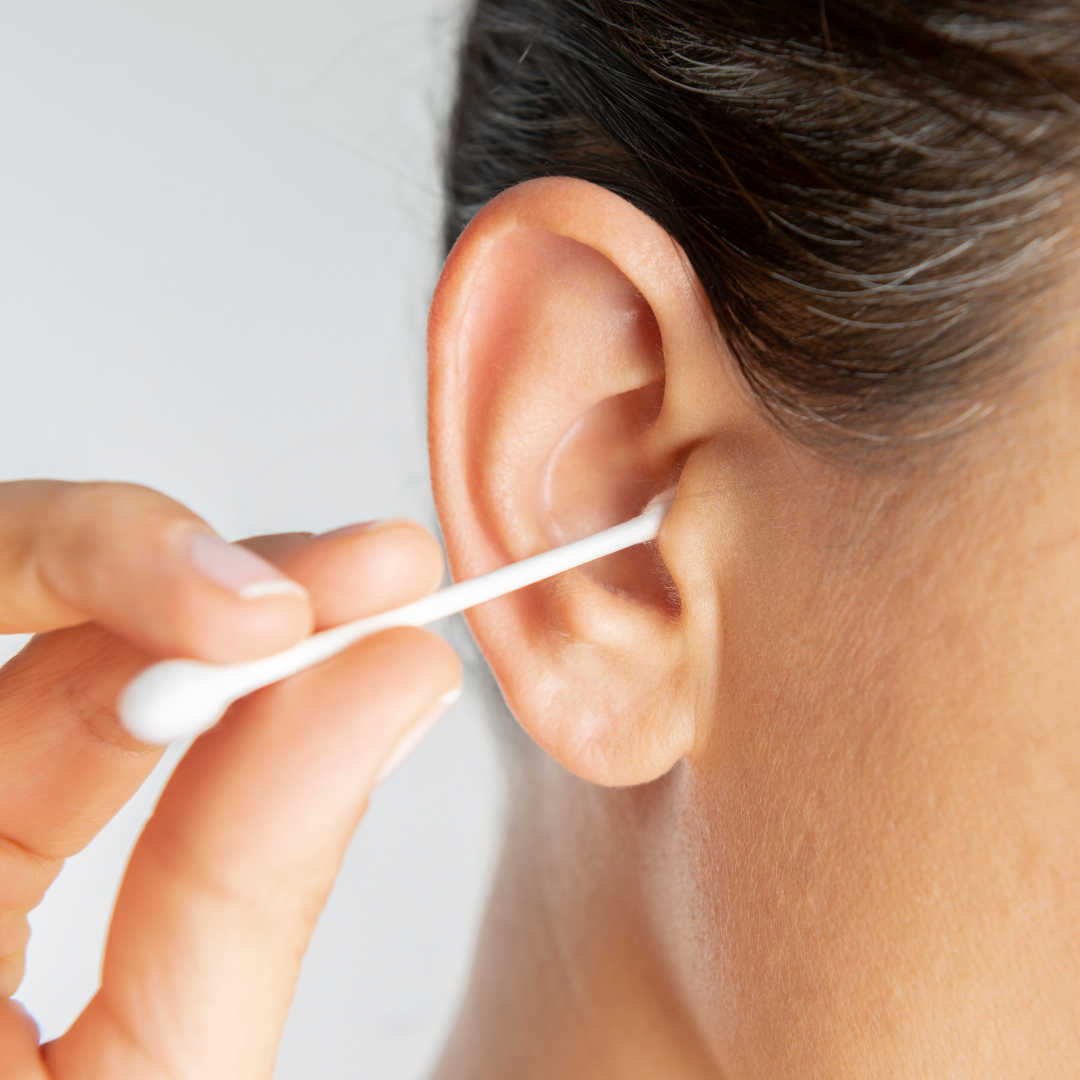
Cotton swabs may seem like convenient ear-cleaning tools, but inserting one into the ear canal can make cleaning harder over time and may damage your ears. Our audiology team evaluates whether cerumen accumulation requires clinical extraction and suggests techniques tailored to your auditory health. Ears don’t always need manual cleaning; however, if wax builds up, we can help patients safely remove excess wax.
What Makes Q-Tips Harmful to Ear Health?
Biologically, earwax—known clinically as cerumen—is not an unhygienic waste product. Cerumen works to entrap airborne particles, deter infectious pathogens, hydrate the auditory canal, and protect thin dermal layers. Jaw movement and normal skin migration gradually carry old wax toward the ear opening, where it flakes away or washes off during bathing.
Inserting a cotton swab directly into the auditory canal interferes with this natural clearance mechanism. Even if the swab gathers a trace of surface cerumen, it routinely compacts the remaining mass against the eardrum. Habitual use tends to compress wax into a stubborn plug, producing an uncomfortable blocked feeling that prompts further harmful scrubbing.
Although swabs can sanitize the outer folds of the auricle, they should never penetrate the delicate ear canal.
Potential Ear Damage and Complications from Q-Tips
The sensitive skin protecting the ear canal exhibits extreme thinness and scratches effortlessly. Small dermal abrasions produce soreness or light bleeding while allowing microbes to enter, raising the incidence of outer-ear infection. Furthermore, the cotton fibers may separate from the stick, leaving a foreign body lodged within the canal.
Clinically documented swab injuries include:
- Earwax compressed tightly against canal walls
- Scratches, irritation, swelling, or bleeding
- Acute otitis externa or canal infection
- Cotton swab fragments trapped inside the auditory canal
- A torn or perforated eardrum
- Trauma inflicted on the ossicular chain behind the eardrum
- Temporary or permanent hearing changes
- Onset of tinnitus, positional dizziness, or acute ear pain
Although catastrophic damage remains relatively rare, unexpected arm bumps, hand slips, or excessive insertion depth easily cause acute harm.
How Frequently Should You Remove Earwax?
The majority of individuals do not require routine or scheduled cerumen extraction. Healthy ears continually move wax outward, and routine bathing usually cleans the visible outer ear. Overzealous hygiene parches canal tissue, incites chronic irritation, and increases vulnerability to bacterial infection or deep plugs.
Removal becomes appropriate when wax blocks the canal, prevents us from examining the eardrum, interferes with a hearing aid, or causes discomfort.
Clinical Guidance for Safe At-Home Cerumen Care
Whenever cerumen remains asymptomatic, avoiding manual intervention represents the safest course of action. Clean exclusively around the exterior auricle using a soft, moist cloth, letting the auditory canal clean itself naturally.
When wax needs softening, we may recommend an over-the-counter cerumen-removal product or drops containing ingredients such as mineral oil, glycerin, saline, or carbamide peroxide. Ensure you use the exact recommended volume and follow the labeled duration instructions carefully. Immediately halt applications if the medication triggers pain, profound dizziness, skin irritation, or deteriorating symptoms.
At-home ear irrigation is not universally safe and requires clinical clearance and technique demonstration from an audiology professional beforehand. Never utilize motorized oral irrigators or dental water devices in the ear canal. Do not use dangerous devices like ear candles, metal scrapers, endoscopic camera tools, hairpins, or unverified suction units. These hazardous instruments often cause cutaneous burns, sharp cuts, eardrum ruptures, or compounded cerumen impaction.
When Is Professional Earwax Extraction Necessary?
Schedule an appointment when an ear remains plugged after an appropriate softening treatment, wax appears deeply impacted, or home care repeatedly fails. Expert removal is the safest path for patients who struggle to hold still, individuals with narrow ear canals, hearing aid wearers, or those with surgical contraindications to irrigation.
You should seek professional assessment for:
- Unresolved ear discomfort, persistent canal itching, or touch sensitivity
- Visible blood, purulent discharge, clear fluid drainage, or offensive ear odors
- Fever or swelling around the ear
- The rapid emergence of tinnitus or episodic dizziness
- Rapid-onset hearing impairment or ongoing hearing deficits post-cleaning
- A suspected tympanic membrane rupture or retained swab material
- Repeated wax accumulation that impairs prescription hearing devices
Any rapid-onset hearing loss in one ear must be evaluated as an emergency rather than dismissed as a wax plug. Immediate assessment allows clinicians to differentiate an external canal obstruction from an urgent inner-ear pathology.
Audiological Approaches to Excess Earwax Removal
We first examine the canal with an otoscope or microscope to confirm that wax is present and look for infection, injury, or an eardrum perforation. Selecting the optimal extraction technique depends upon cerumen density, canal geometry, patient health history, prior otologic surgeries, and procedural comfort.
In-office clinical procedures include:
- Topical cerumenolytic drops applied prior to or during the clinical visit
- Calibrated warm-water irrigation using body-temperature fluid for intact eardrums
- Gentle suction under direct visualization
- Mechanical extraction using sterile ear loops, specialized curettes, or micro-forceps
Direct visual control ensures the provider maneuvers safely around thin canal skin and stops if any tenderness develops. Dense or desiccated cerumen impactions frequently necessitate using more than one removal method. Upon completing removal, the clinician performs a final inspection to confirm optimal canal and eardrum health. Should sensations of fullness, tinnitus, balance issues, or hearing loss persist, comprehensive diagnostic testing will isolate the true underlying etiology.
Schedule Professional Earwax Removal
If you notice a blocked sensation or changes in auditory clarity, contact us for an evaluation rather than inserting a Q-Tip. Your appointment can include a review of symptoms, previous ear procedures, hearing aid use, home treatments, and factors that may increase wax buildup. Contact us to request an earwax-removal appointment.