
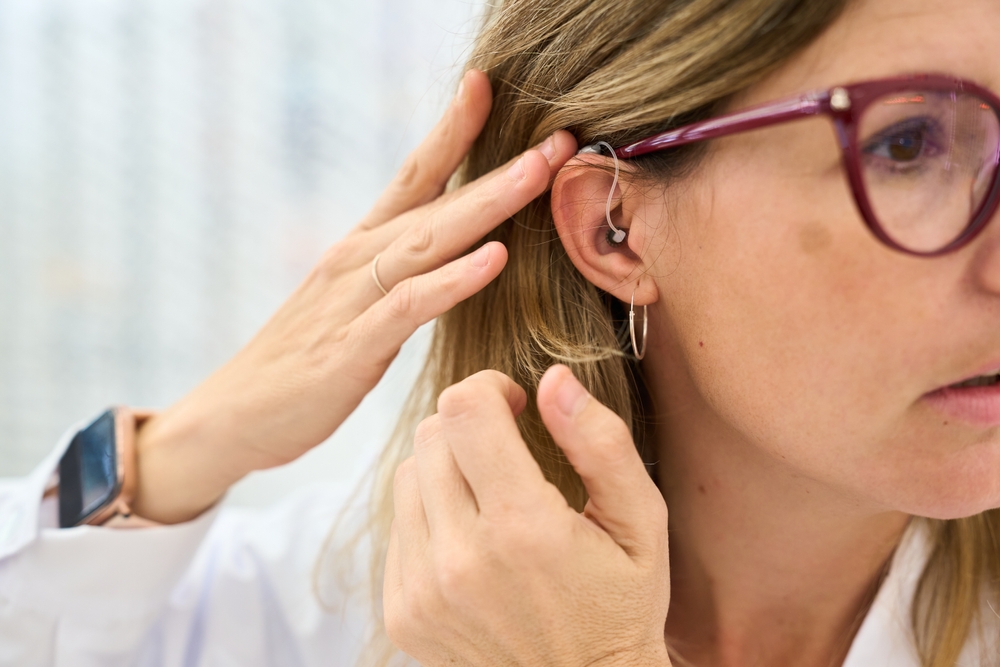
A significant number of patients postpone treating their hearing loss because they harbor concerns regarding device aesthetics and physical comfort. In past generations, primitive auditory devices were heavy, highly visible, and frequently viewed as an embarrassing marker of advanced age. Regrettably, some people even experienced social alienation because acquaintances falsely assumed that wearing a visible aid signaled a complete inability to comprehend spoken dialogue.
Because this archaic mental image endures, thousands remain deeply reluctant to schedule an initial audiometric evaluation. The liberating truth is that twenty-first-century auditory tech offers a level of cosmetic elegance and physical comfort that surprises most patients. Revolutionary breakthroughs in micro-component miniaturization and ergonomic design have rendered these devices incredibly compact, ultra-lightweight, and virtually unnoticeable.
If you’ve been putting off treatment because of how hearing aids used to look, it might be time to take a fresh look at what’s available today!
Why the Bulky, Obvious Hearing Aid Is a Thing of the Past
When asked to visualize a hearing instrument, the average person still envisions an awkward, highly conspicuous piece of hardware visible from yards away. If that’s the case, you’re thinking about hearing aids circa the 1980s and ’90s.
Since that era, the manufacturing landscape for hearing solutions has completely transformed. Exponential leaps in digital circuit shrinking, industrial design, and audio computing have totally redefined contemporary hardware. Current product lines are incredibly compact, architecturally clean, and purpose-built to harmonize with your features or sit entirely out of sight.
Numerous modern instruments are inserted completely within the ear canal structure, rendering them undetectable throughout standard daily dialogue. Alternative styles occupy a tiny footprint behind the pinna, utilizing ultra-light materials and customizable color palettes to match hair or skin tones perfectly.
Understanding Your Options: A Guide to Contemporary Device Form Factors
If you’re wondering what your main options in hearing aids actually look like, here’s a simple breakdown:
Invisible-in-Canal (IIC) Technology
This tier represents the absolute pinnacle of cosmetic concealment. The IIC style fits exclusively within the deep internal canal and is built using a custom impression of the patient’s ear passagographic anatomy. When engaging with others at standard social distances, these units are utterly unnoticeable to the naked eye. They represent an ideal intervention path for mild-to-moderate hearing impairments when user stealth is the top priority.
Receiver-in-canal (RIC) / Receiver-in-the-ear (RITE)
Statistically, this open-fit design represents the dominant choice among current consumers. A micro-housing rests behind the upper pinna, transferring processed sound via an ultra-fine, translucent micro-wire to an acoustic driver nestled inside the canal. From an aesthetic standpoint, they look very similar to trendy consumer tech or modern bluetooth monitors. Most people won’t notice them unless they’re looking.
Streamlined Behind-the-Ear (BTE) Systems
This style positions the main component body post-auricularly, offering a slightly larger footprint that remains beautifully sculpted and sleek. Clinically indicated for profound or severe hearing deficits, they deliver immense acoustic power without the outdated, conspicuous mass of the past.
The bottom line is simple: modern assistive hearing systems are crafted to serve your life quietly, not to draw attention to your ears.
Advanced Features: Beyond Aesthetics to Smart Technology Integration
The changes in modern hearing aids aren’t just cosmetic. Today, they function more like smart devices than traditional medical equipment. Many connect directly to your phone via Bluetooth, letting you stream calls, music, or even TV audio straight to your ears with no headphones needed.
Equipped with dedicated smartphone applications, they allow users to manipulate volume matrices or toggle environmental programs without making manual physical adjustments. Should you transition into a loud social environment, you can instantly recalibrate your directional microphones via your phone screen. Convenient overnight charging systems have permanently replaced the tiny disposable batteries that patients traditionally struggled to replace. Just place them on a charger overnight, like your phone.
Getting Over the Fear and Stigma of Hearing Devices
Despite understanding these technological quantum leaps, psychological resistance remains highly common. Initiating an auditory health journey can feel emotionally taxing because it requires acknowledging that our physical baseline has shifted over time. This mental hurdle can make an individual feel exposed, creating a false impression of losing authority over personal wellness.
However, an alternative, empowering framework exists: utilizing hearing technology is never an indicator of structural failure. Rather, they represent a proactive response to natural biological evolution—a transition shared by every human being. Investing in your hearing shows that you are actively deploying advanced resources to support your systemic well-being and social connection.
Picture yourself wearing an ultra-low-profile, virtually invisible instrument that allows you to effortlessly decode rapid speech, thrive in complex soundscapes, and re-engage with your favorite hobbies. That level of sensory restoration is incredibly liberating!
See For Yourself What Today’s Hearing Aids Look Like
To dismantle old assumptions, the best strategy is to witness these design breakthroughs with your own eyes. We warmly welcome you to tour our practice, consult with our audiologists, and review our product lines with absolutely no financial or purchase obligations. Think of your visit as an educational open-house to experience the lightweight engineering of modern hearing instruments firsthand.
You will likely be utterly delighted to discover how microscopic, physically seamless, and high-performing today’s options truly are! Reach out to our administrative team or visit our website right now to book your personal demonstration.